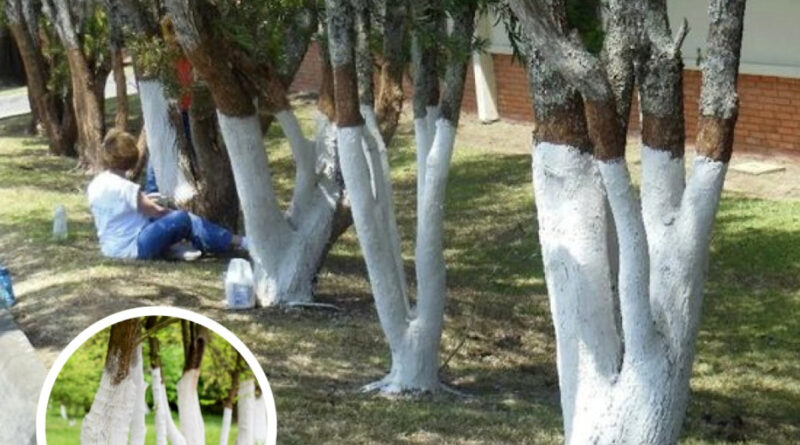
If You Spot A Tree Painted White, Here’s What It Means
Note: We are republishing this story, which originally made the news in June 2023.
Spend enough time online and you’ll quickly discover a huge community of plant lovers, gardeners, and tree enthusiasts sharing tips, techniques, and clever ways to help their plants thrive. Among them, few are more dedicated than the people who devote their time and energy to growing and protecting trees.
After all, raising a healthy fruit tree from a tiny sapling into a strong, productive plant takes patience, care, and a surprising amount of know-how. And along the way, many experienced growers rely on some fascinating little tricks that might seem unusual at first glance.
Have you ever wondered why some people cover their trees with nets — or why, every now and then, you’ll see a tree trunk coated in white paint?
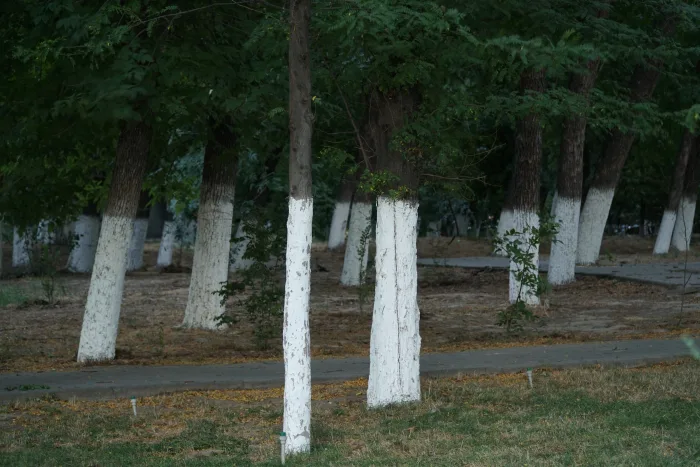
Trees with most of their trunk painted white, Photo Credit: Wikimedia
For those familiar with the colorful language of tree markings, an orange dot often signals the impending fate of a tree – it’s earmarked for removal. Occasionally, you may encounter trees adorned with a regal purple hue, indicating territorial boundaries and issuing a warning to potential trespassers. But what about the pristine white coat?
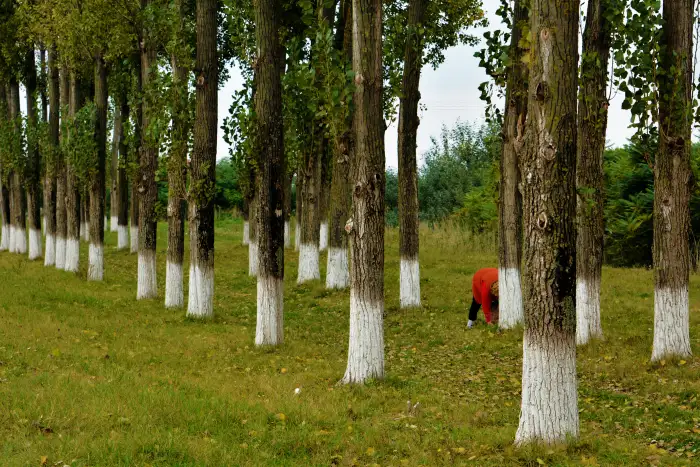
Rows of trees with their lower trunks painted white are a common sight in orchards and residential areas. (Photo credit: Wikimedia)
The practice of painting tree trunks white serves an important purpose — it helps protect trees from a condition known as sunscald, which can cause serious damage, especially during the winter months.
Sunscald happens when there are extreme temperature swings between cold nights and sunny days. During the day, sunlight warms the bark, causing it to expand. Then, when temperatures drop quickly at night, the bark contracts. This constant stress can lead to cracking or splitting, leaving the tree vulnerable to disease and long-term damage.
Applying a light-colored (usually white) coating helps reflect sunlight, preventing the bark from overheating during the day and reducing these harmful temperature fluctuations. In this way, the paint acts as a simple but effective protective barrier.
This method is most commonly used on young trees, thin-barked species, and fruit trees in orchards, where maintaining healthy bark is essential for long-term growth and productivity.
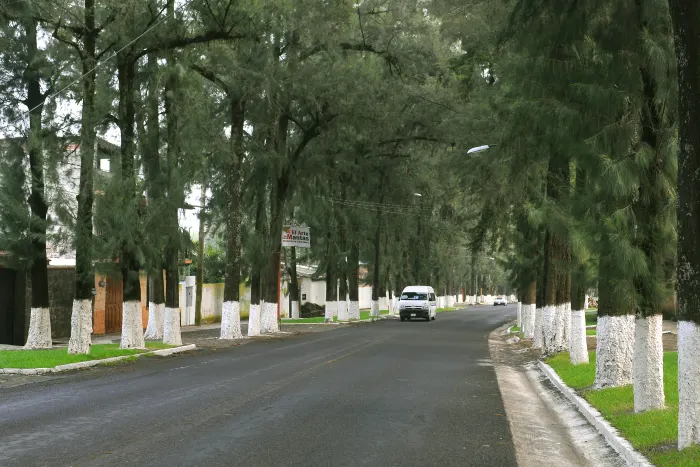
Trees lining both sides of a road with their lower trunks painted white are a familiar sight in many rural and agricultural areas. (Photo credit: Wikimedia)
When it comes to protecting trees this way, the type of paint used is extremely important. Most growers and gardeners prefer water-based latex paint, as it is considered safer and more suitable for tree bark than oil-based alternatives.
The paint is usually diluted with water, with a common ratio being one gallon of latex paint mixed with one gallon of water. Some people go a step further and create a blend using equal parts water, latex paint, and joint compound, producing a thicker coating that not only helps protect against sunscald and weather damage, but may also discourage certain boring insects from damaging the bark.
When it’s time to apply the coating, a paintbrush is typically the best tool for the job. Although spraying is sometimes used, brushing tends to provide a more even and reliable protective layer.
For many tree growers, especially those with fruit trees or young saplings, this becomes an annual protective routine — almost like giving the tree its own winter coat to help it withstand harsh seasonal conditions.
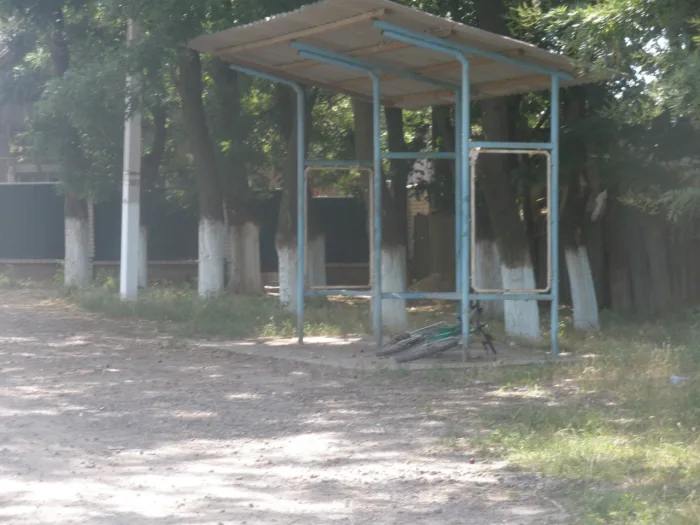
Trees with part of their trunk painted white, Photo Credit: Wikimedia
In the vibrant world of tree enthusiasts, the act of painting trees white emerges not as a mere aesthetic choice but as a strategic defense against nature’s unpredictable whims. With every stroke of the paintbrush, these guardians of the green realm ensure the longevity and resilience of their leafy charges, leaving an indelible mark on the landscape they so ardently cultivate.