27-year-old pays $0 to live in a ‘luxury tiny home’—how she built it for $4,000: ‘I forget I’m living in a shed’
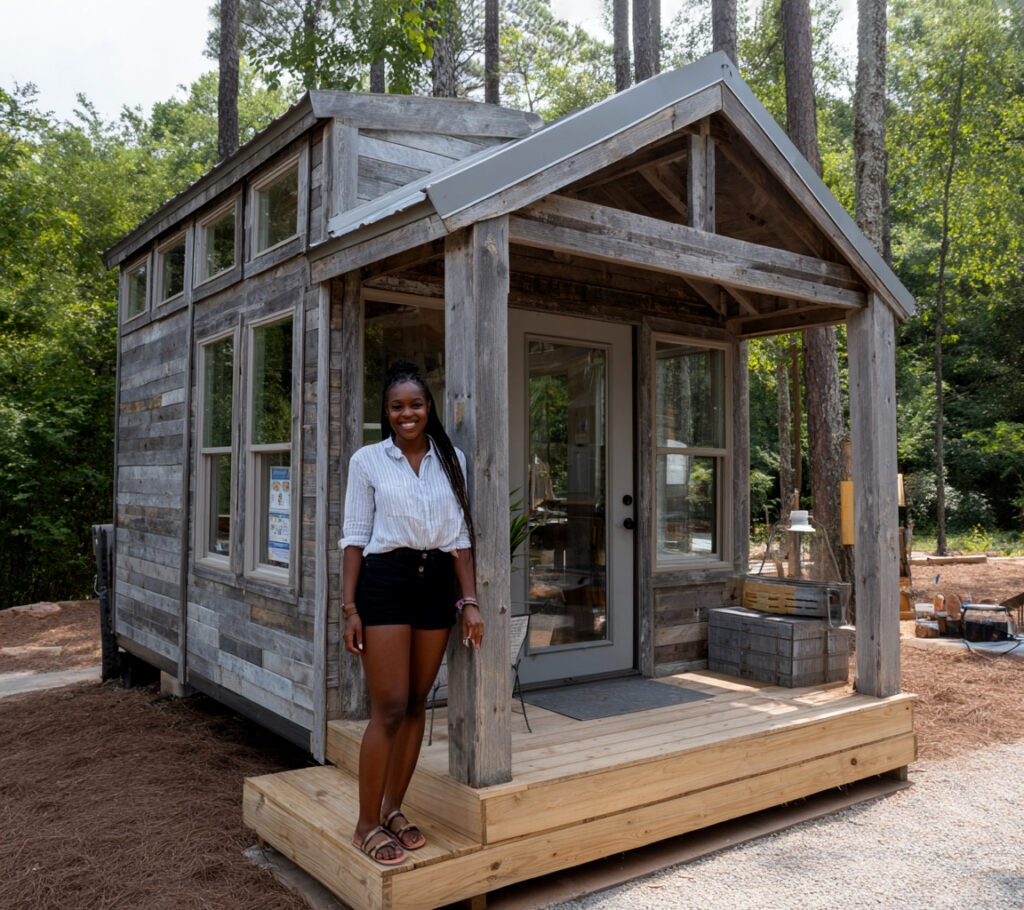
In 2020, I spent just over $4,000 building a microhome in the backyard of my 1,400-square-foot house in Atlanta, Georgia. At the time, my goal was simple: reduce my living expenses and make better use of the property I already owned. What I didn’t realize was that this small project would completely change the way I live—and eventually allow me to live mortgage-free.
Today, I rent out my main house, and that rental income covers the mortgage, property taxes, and utility bills. That means the tiny backyard home I built has become my personal living space, while my larger home now pays for itself. It’s a setup that has given me more financial freedom than I ever expected.
Living Small Doesn’t Feel as Cramped as You’d Think
At just 296 square feet, the microhome may sound tiny on paper. From the outside, it looks like a simple shed-style structure. But inside, it feels surprisingly comfortable and functional. Every inch was designed with purpose, and because the layout works so well, I often forget how small it actually is. Living in a space like this forces you to be intentional, but it also teaches you how little you truly need to feel at home.
As housing costs continue to rise, more people across the United States are becoming interested in tiny homes and backyard microhouses as a way to simplify life and reduce expenses. But while the idea sounds straightforward, building one is not something you should jump into without preparation. If you’re thinking about doing something similar, here are the most important things I learned along the way.
Step 1: Research Zoning Rules First
Before you build anything, the very first step is understanding the zoning laws in your area. These rules determine what kinds of structures are allowed on your property, where they can be placed, and whether they can legally be used as living space.
Some cities have become more flexible in recent years, especially as they look for ways to ease housing shortages. But many areas still have strict rules when it comes to adding structures like tiny homes or backyard dwellings.
A good place to start is your city’s zoning map, which is often available online. Searching for terms like “zoning map” or “planning office” along with your city’s name can usually point you in the right direction. Make sure to check whether your neighborhood falls under any special zoning category, since those often come with extra restrictions.
If the rules are confusing, it’s worth reaching out directly to your city’s planning or construction department. They can help clarify what is and isn’t allowed, and whether you’ll need permits or special approval before building.
Step 2: Learn the Building and Safety Codes
Zoning is only one piece of the puzzle. You’ll also need to understand your local building codes and safety regulations, which are there to make sure any structure used for living is safe and legally compliant.
Even though a tiny home is small, it still needs to meet certain standards for things like:
- Electrical systems
- Plumbing
- Insulation
- Ventilation
- Structural safety
If your tiny home will be stationary rather than mobile, it will usually be treated more like a permanent structure, which means it may need to follow the same rules as a small house or accessory dwelling unit.
That can include requirements for foundation work, proper utility hookups, and construction inspections. Skipping this step can create expensive problems later, so it’s smart to talk to professionals or local inspectors early in the process.
Step 3: Set a Realistic Budget and Design Carefully
One of the biggest reasons people are drawn to tiny homes is affordability—but that doesn’t mean they’re automatically cheap. My own build came in at around $4,000, but costs can vary a lot depending on your materials, design choices, and whether you do the work yourself or hire help.
When planning your budget, make sure to include:
- Building materials
- Tools and equipment
- Permits and fees
- Utility setup
- Labor (if needed)
- Extra money for unexpected mistakes or repairs
The design stage is just as important as the budget. Because the space is so small, every square foot needs to serve a purpose. Before building, think carefully about how you want to use the home. Will it be a full-time residence, a guest space, a home office, or a rental unit?
Storage, layout, lighting, and furniture all matter much more in a tiny home than they do in a traditional house. A well-designed small space can feel comfortable and open—but a poorly planned one can quickly feel frustrating.
Final Thoughts
Building a tiny home in your backyard can be one of the smartest ways to make the most of your property. It can lower your expenses, create rental income, and open the door to a more flexible, intentional lifestyle.
But it’s not something to do blindly.
Success comes from doing your homework first—understanding your local laws, following building codes, creating a realistic budget, and designing a space that truly works for your needs.
For me, building a backyard microhome wasn’t just a housing project. It became a path to financial freedom, simplicity, and a new way of living.
And in the end, that tiny structure turned out to be one of the biggest life upgrades I’ve ever made.