Stop Covering Farmland With Solar — Start Using Parking Lots Instead
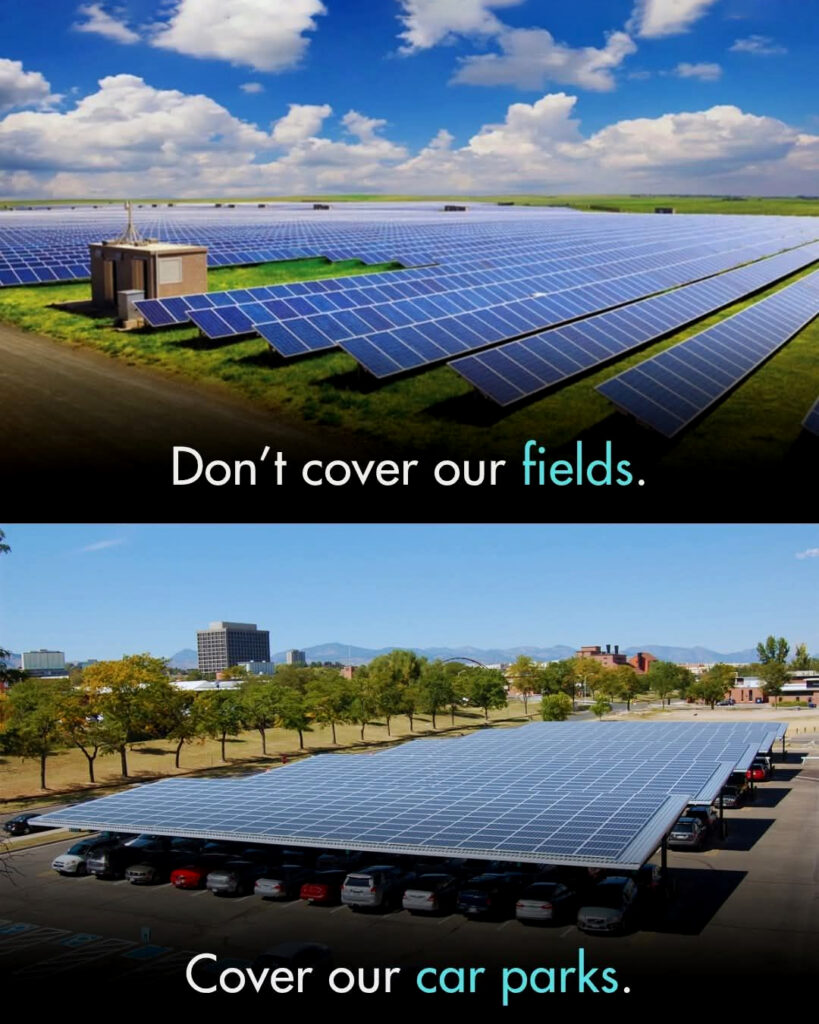
This image makes a powerful point in the simplest way possible: why are we covering valuable open land with solar panels when we already have millions of square feet of paved parking lots sitting in direct sunlight every day? The comparison is impossible to ignore. One side shows wide, usable land taken over by solar infrastructure. The other shows a practical solution that produces clean energy without sacrificing space we still need for food, nature, and rural life.
Farmland is more than just “empty land.” It feeds people, supports local economies, protects ecosystems, and carries long-term value that should not be casually replaced. Once productive land is covered and converted, it changes how that space functions for generations. That’s why more people are starting to ask an important question: are we placing renewable energy in the smartest locations—or just the easiest ones?
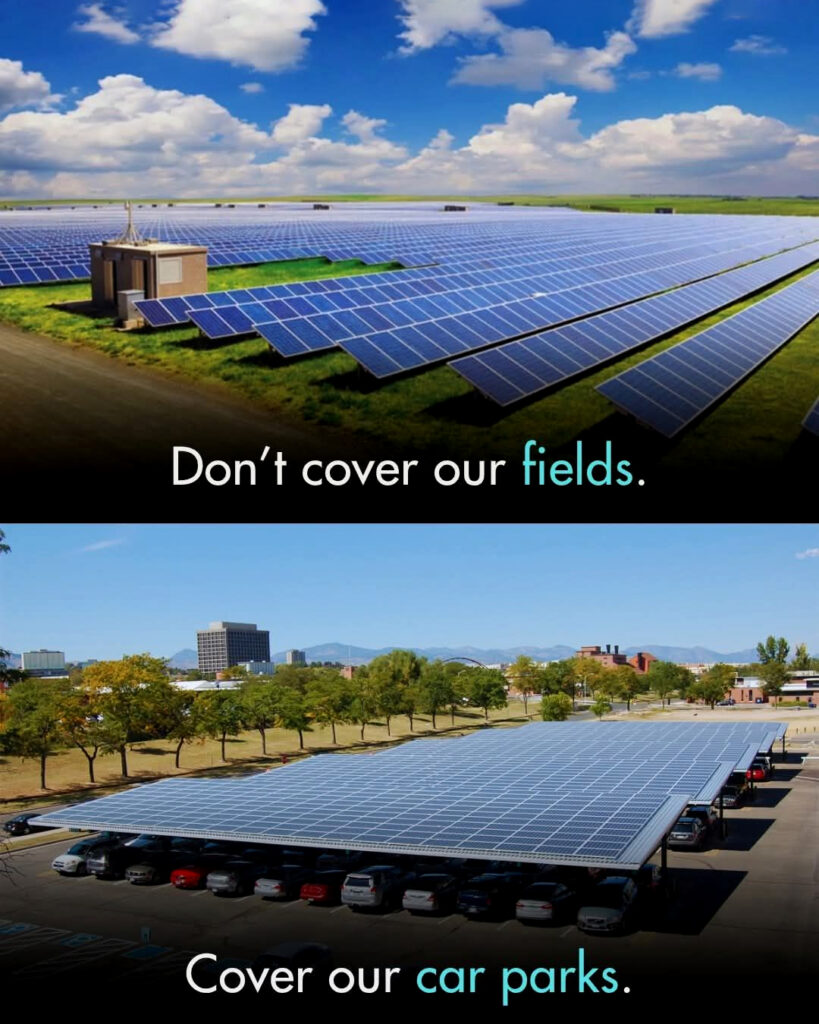
Parking lots, on the other hand, are already built, already paved, and already exposed to intense sun. Covering them with solar canopies doesn’t take away farmland, forests, or open space—it actually adds value to land that’s already in use. It can generate electricity, provide shade for vehicles, reduce heat buildup in urban areas, and even make electric vehicle charging more practical. That’s not just clean energy—it’s smarter infrastructure.
This kind of design also solves more than one problem at once. In summer, solar-covered car parks can keep vehicles cooler and improve the comfort of public spaces. In cities and commercial areas, they can turn dead asphalt into something productive. Instead of forcing a choice between clean energy and land preservation, solutions like this show we can push for both—if we think a little more intelligently about where things go.
Sometimes the best ideas are the ones that feel obvious the moment you see them. This image doesn’t just compare two solar installations—it challenges the way we think about progress. If we’re serious about sustainability, then where we build matters just as much as what we build. And maybe the future of solar shouldn’t begin by taking more from the land—but by finally making better use of what we’ve already covered.