An ancient heating concept—brilliantly designed and still relevant today

How Kashmir’s Ancient Hammam Is Redefining Winter Warmth
The Stone Warmth of Winter: Why Kashmir’s Ancient Hammam Is Making a Powerful Comeback
In the depths of a Kashmiri winter, warmth is not a luxury—it is survival. As temperatures plunge well below freezing and electricity becomes increasingly unreliable, an ancient architectural solution is quietly reclaiming its place at the heart of daily life: the hammam.
Once reserved for royal courts, mosques, and historic homes, the traditional Kashmiri hammam is experiencing a remarkable revival. Rooted in centuries-old wisdom, this stone-heated room is proving that heritage architecture can outperform modern technology when it comes to resilience, efficiency, and human comfort.
More Than a Heated Room
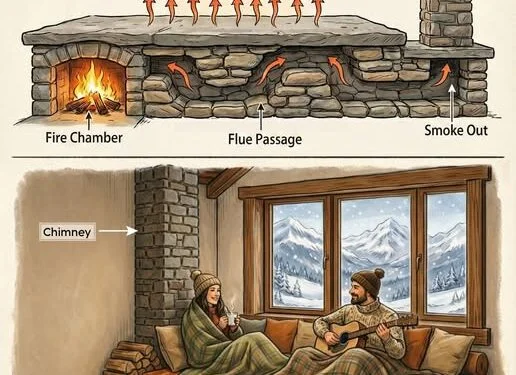
Unlike the Turkish hammam, designed for steam bathing, the Kashmiri hammam serves an entirely different purpose. It is a stone-floored living space, warmed from below by a wood-fired chamber. Thick stone slabs absorb heat slowly and release it evenly, keeping the room comfortably warm for hours—even after the fire has burned out.
Beneath the floor lies a hidden copper water tank, known locally as the khazane. It captures excess heat from the fire, supplying hot water alongside space heating. With a single fuel source providing dual functionality, the system is as elegant as it is efficient—perfectly suited to Kashmir’s unforgiving winters.
A Response to Modern Challenges
In recent years, extended power outages, rising fuel costs, and harsher cold spells have forced many households to rethink their reliance on electric heaters. The hammam, requiring no electricity and relatively little fuel, offers a dependable alternative.
Architects and homeowners are rediscovering its value—not merely as a heating method, but as a climate-responsive design solution. Built from local stone and crafted using traditional techniques, hammams are deeply attuned to the region’s geography, materials, and weather patterns.
The Social Heart of the Home
Beyond its technical brilliance, the hammam holds profound cultural significance. Traditionally, it was the warmest room in the house—a gathering place where families ate, prayed, talked, and rested together. In mosques and community spaces, hammams served as social anchors during long, isolated winter nights.
Today, that communal spirit is returning. In an increasingly disconnected world, the hammam is once again becoming a place of shared warmth, conversation, and comfort.
Sustainability Through Tradition
As sustainable architecture gains global attention, the Kashmiri hammam stands as a powerful reminder that low-tech solutions can be extraordinarily advanced. Built with local materials, powered by renewable firewood, and reliant on passive heat storage, it leaves a minimal environmental footprint while delivering maximum performance.
In Kashmir, the future of winter warmth may not lie in new technology—but in the quiet brilliance of stone, fire, and centuries-old design.

This revival is not about rejecting modernity—it is about integration. It reflects a growing recognition that traditional knowledge and contemporary living do not stand in opposition, and that ancient solutions can still guide us toward more resilient ways of building and inhabiting space.
Keeping the Craft Alive
Yet the return of the hammam also brings urgent challenges. The number of skilled artisans capable of constructing these stone-heated rooms is steadily declining, and locally sourced materials are increasingly replaced by imported alternatives. Without deliberate effort, the knowledge that makes hammams possible risks being lost.
Preserving this architectural heritage requires more than admiration. It demands investment in traditional craftsmanship, support for local materials, and the transmission of skills from one generation to the next.
A Warm Future Rooted in the Past
As winters intensify and modern energy systems come under greater strain, the Kashmiri hammam offers a timeless reminder: innovation is not always about invention. Sometimes, it is about remembering what already works.
In the quiet, steady glow of heated stone, the hammam continues to beat as the heart of winter—resilient, sustainable, and profoundly human.